 University of North Texas

Jordan Mitchell
Letting Peace Corps Lead You:
Jordan Mitchell’s Time in Ohrid, Macedonia (2023-2025)
Jordan Mitchell currently lives in Austria and is studying Cultural Differences and Transnational Processes to earn his Masters in Anthropology from the University of Vienna. He is going to school with one of his best friends and hopes to work in international humanitarian aid.
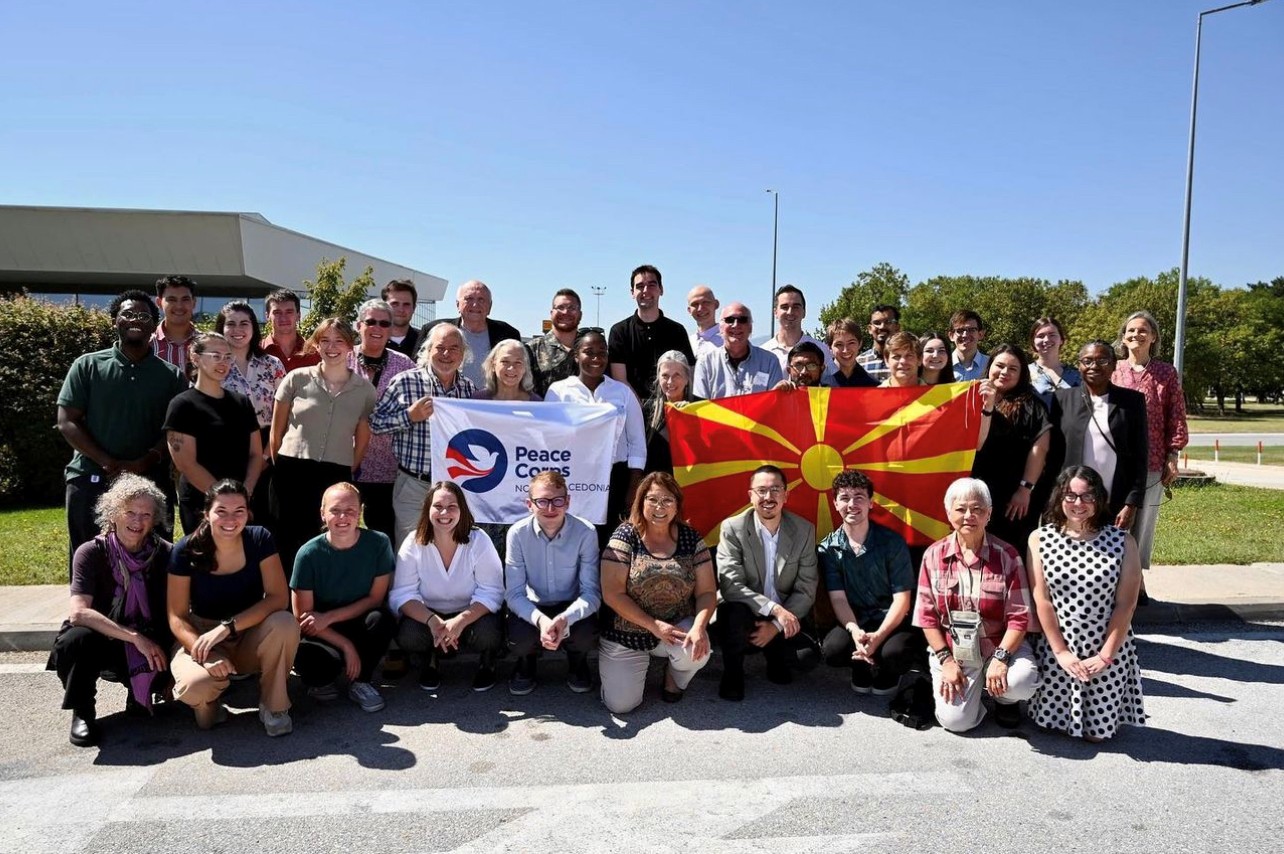
Jordan Mitchell's first day in Macedonia.
While Jordan is happy about his achievements and excited about his ambitions, they came about unexpectedly. As he finished up his Peace Corps service in early 2025, Jordan was unable to get the job he wanted with the Department of Labor because of the government hiring freeze.
“[Peace Corps] has kind of set up my career in a way that, it was ok that I had to pivot,” Jordan said.
Jordan originally pursued Peace Corps because he knew it would be a valuable experience for his career path. As he finished his undergraduate Anthropology degree at UNT, he went to his advisor for recommendations on how to get experience abroad.
That advisor directed him toward a Peace Corps recruiter and, soon enough, Jordan was ready to commit.
His family took some convincing, as they wanted him to prioritize a more money-forward job, but Jordan knew that service was right for him.
“For what I’m doing, these two and a half years of Peace Corps service is going to set up my career for life,” he told them.
As he explained all of the elements and benefits of service, his family understood why he wanted to serve, and Jordan set off for Macedonia to work in English Education.
Since English fluency is very uncommon in Macedonia, learning Macedonian was a top priority in Jordan’s pre-service training. Luckily, he had nine hours each day of language practice to develop his skills.
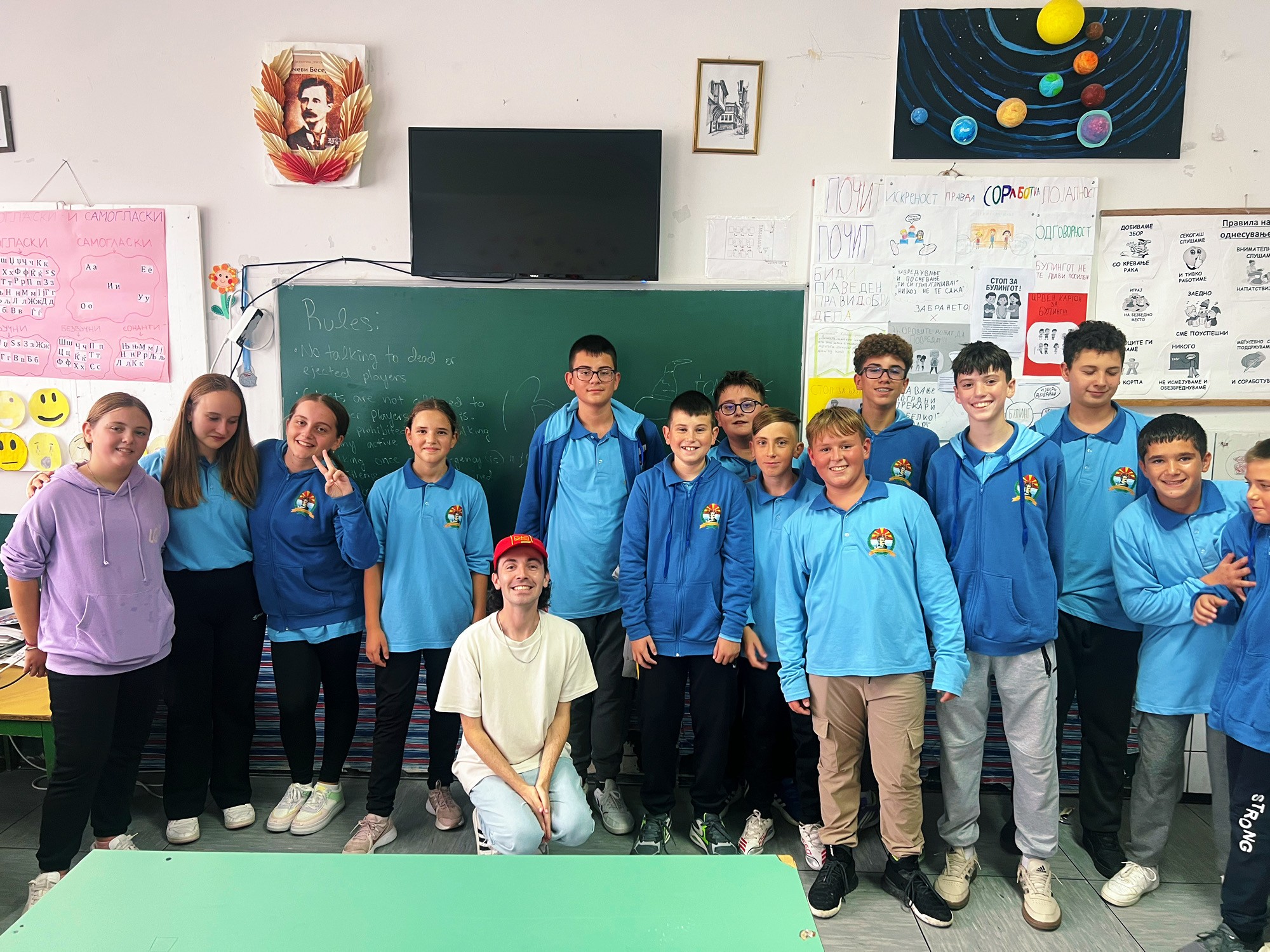
Jordan worked in English education in Macedonia.
“It helps you learn when you’re forced into the situation where if you want to eat, if you want to get laundry done, you have to learn,” Jordan said, laughing.
Jordan’s experience with linguistics and cultural studies allowed him to pick up on the language and culture quicker than his fellow volunteers. Although he excelled there, he struggled with other areas of his work.
“I think my most challenging thing was learning how to teach,” Jordan said. “I had never really taught before.”
Jordan spent a lot of his time practicing teaching skills at his school, in camps, at clubs, and at different activities he helped organize for the students.
“Because you’re different and because you’re foreign, a lot of the kids like to talk to you about the things that they have [such as] questions about the world or things that they might not typically talk about with their parents or within Macedonian culture,” Jordan said. “It opens up discussion for lots of things, and it opens up their eyes to the bigger world.”
He assisted with an international writing contest that operated through the Peace Corps between the Balkan countries called Write On!; A competition that works on local, national, and international levels to demonstrate the importance of writing for students across many education levels.
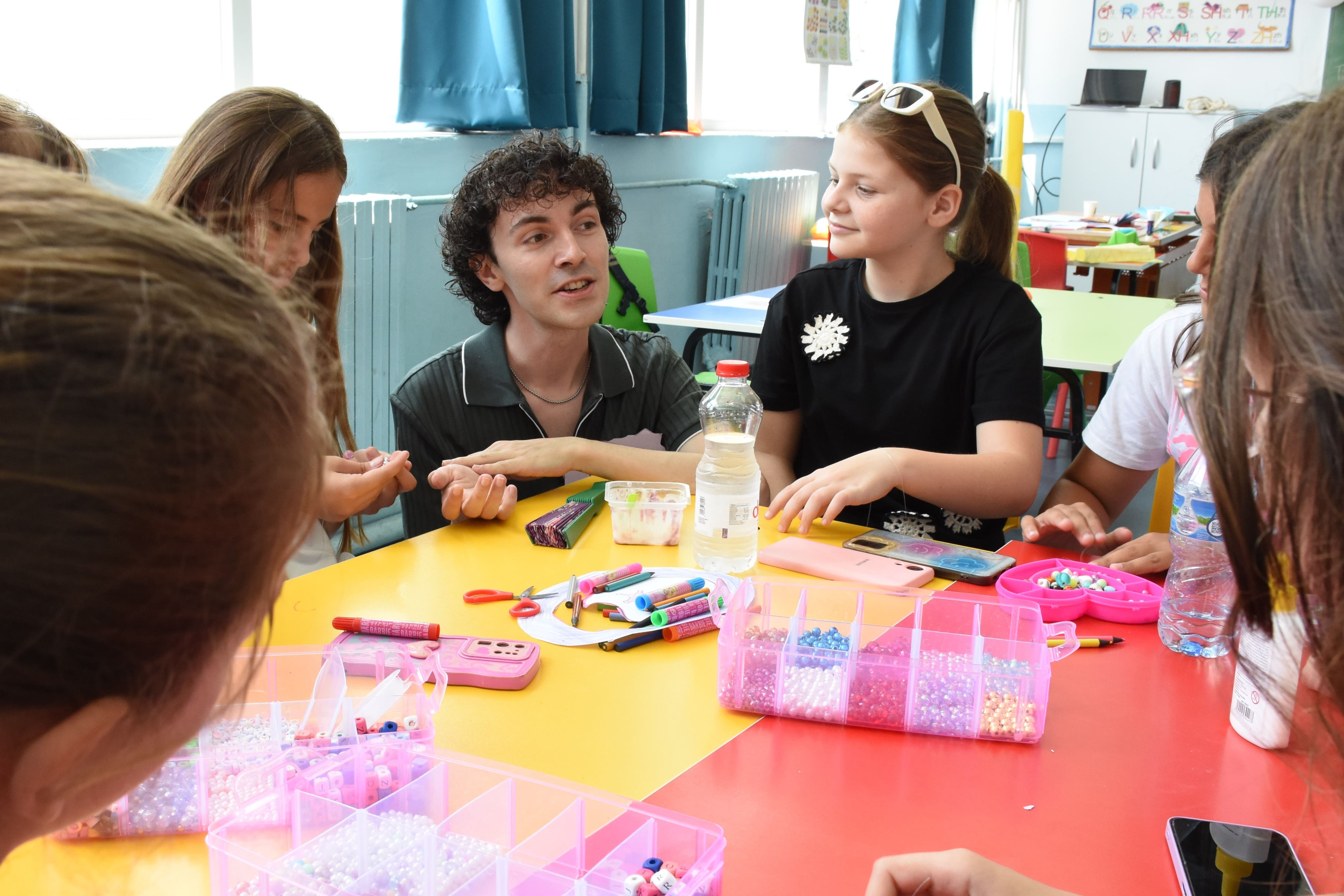
Jordan also helped out around the school and in the community, spending time with
students outside of teaching them English.
Jordan also worked with one of his fellow volunteers to build a connection with Red Cross that brought health education to the students. Volunteers came to classes of students that were about to move away from home for higher education and spoke to them about sexual health and substance abuse.
Outside of his many projects, Jordan learned to embrace Macedonian culture and built many close relationships that he still maintains, including his best friend who is attending the University of Vienna with him.
“People in Macedonia, and in the Balkans, tend to take life a lot slower,” Jordan said. “They tend to look back and it’s not all work, work, work.”
Jordan was happy to live in Ohrid: Macedonia’s largest tourist location. He enjoyed the scenery of living on the border to Albania and Greece by the Ohrid Lake—the oldest in all of Europe.
Within the first year, Jordan started to find his local community that was fast to include him in events and outings.
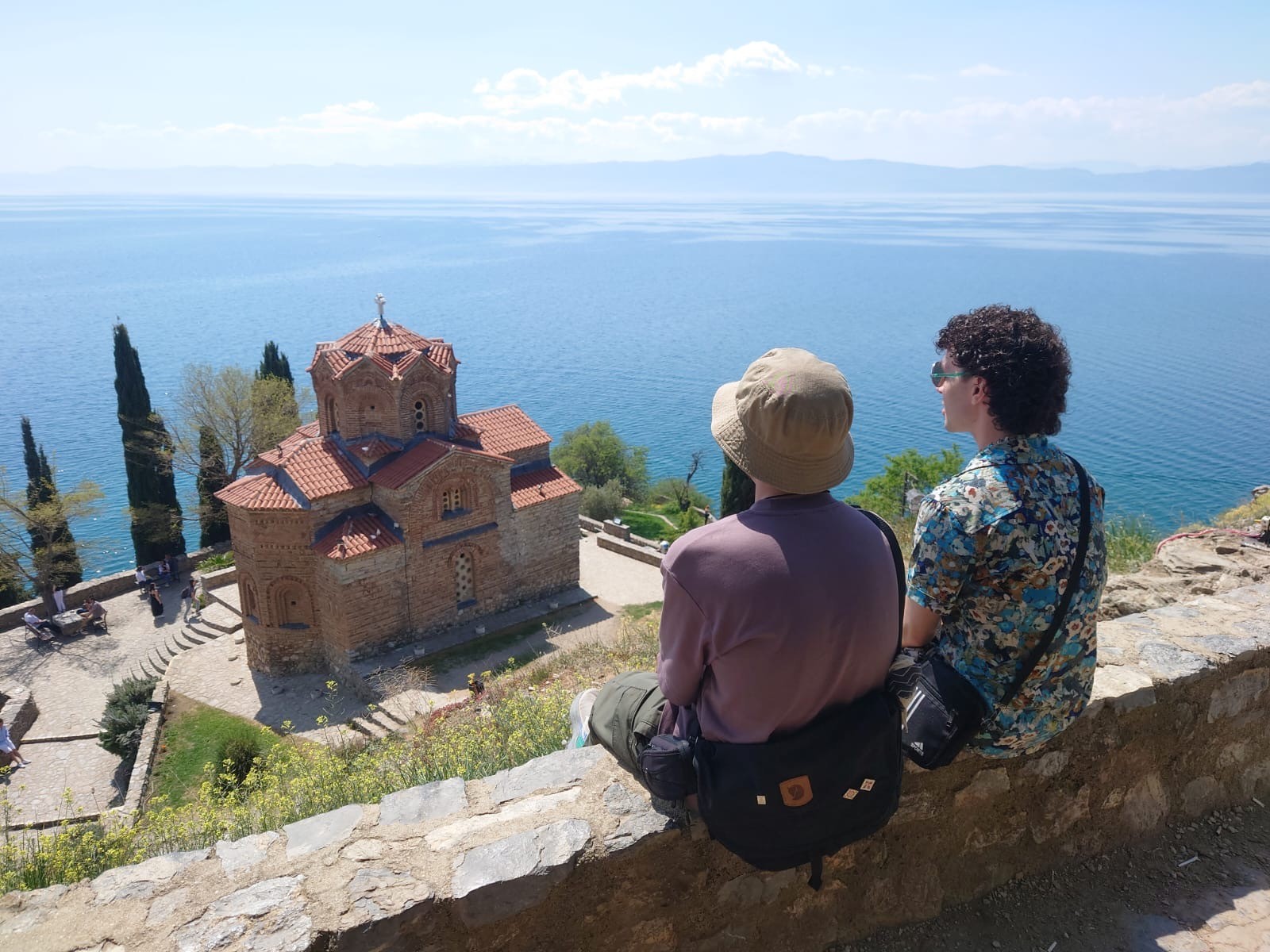
Jordan served in the small village of Ohrid, overlooking Lake Ohrid (Охридско Езеро)
“Most of my memories are tied to my friends that I met there,” Jordan said.
In addition to friendships, Jordan was also able to network with the people he met across the region, which eventually led him to apply to the University of Vienna after he returned to the U.S.
“Hands on experience of integration and language learning and working with different cultures of people from different backgrounds, I think that will help you anywhere,” Jordan said.
Jordan started his journey to Peace Corps at UNT at the advice of an Anthropology advisor, and while it didn’t end the way he expected, it did jump start his career.
“It was the hardest job I ever had, but I wouldn’t trade it for the world,” Jordan said. ‘“I loved every minute of it.”
Do you want to learn more about Jordan's time in Macedonia? You can e-mail him here.
Written and Edited by Eliana Fulton, B.A. Journalism Student at UNT
Interviewed by Zach Yeager, Peace Corps Prep Coordinator