 University of North Texas

Annaliese Limb
Go There, Come Back Safely:
Annaliese Limb’s Time in Côte d’Ivoire (2000-2002)
In her senior year of college, Annaliese Limb wandered through a recruitment fair and stumbled upon the Peace Corps table. She was excited by living internationally and the program’s mission, but, when they started to list the places she might live, she grew hesitant and walked away.
Limb graduated from UNT in 1991 with a Bachelor of Arts in Philosophy and a Bachelor of Arts in Political Science. She had a deep interest in international cultures and enjoyed the global community that UNT represents.
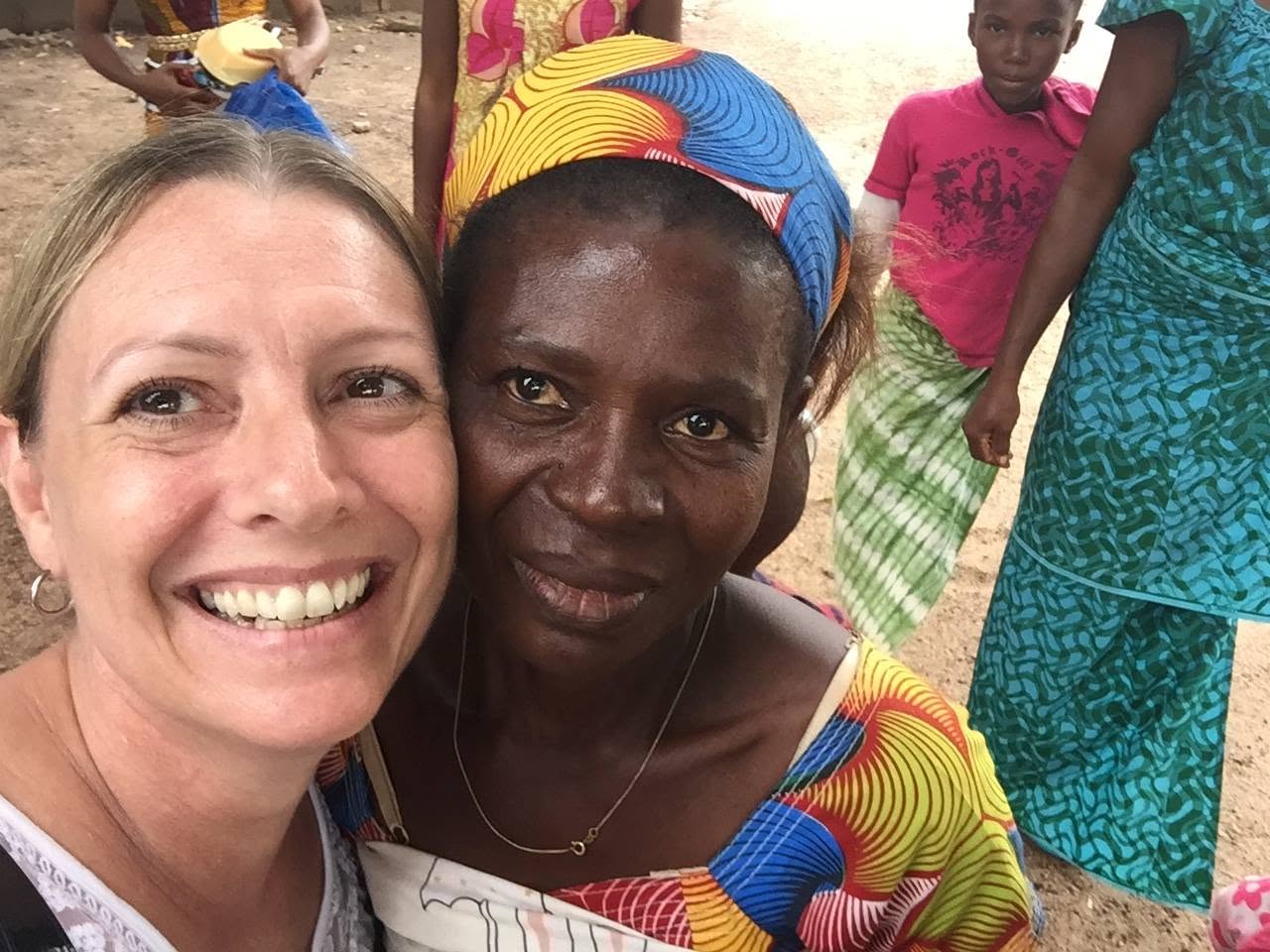
Annaliese visited her village in 2017, meeting up with friends from her time in service.
She went on to work at HIV Services non-profits in Dallas for several years before she saw another recruitment ad for the Peace Corps. With more leadership and life skills under her belt, she felt better prepared for the places she might go.
“If other people can do it, I can do it,” Limb thought.
She took advantage of the student loan deferment that Peace Corps offers, and set off to Côte d’Ivoire to work as a Community Health Educator.
While she was always booked and busy at her non-profit jobs, the pace of the Peace Corps program in her village slowed her down. She needed to take time to learn about the rural community and find her projects.
As she served, Limb eventually found an appreciation for the gentle pace of West Africa. There are no strict schedules or firm start times, and in the evenings, she sat on her porch to talk to neighbors or promenaded with her friends to greet others or share a meal.
“Go there, come back safely,” she would say in the native language of Baoulé as the community members walked past her house to their jobs in the field. On their way back she would greet them again and ask about their “news.”
“[I] spent a lot of time greeting people and asking them how they are,” Limb said.
As Limb gained a foothold in her position, about a year in, conflict in Côte d’Ivoire began to worsen. Limb was offered ‘interrupted service,’ but decided she had to stay despite the instability.
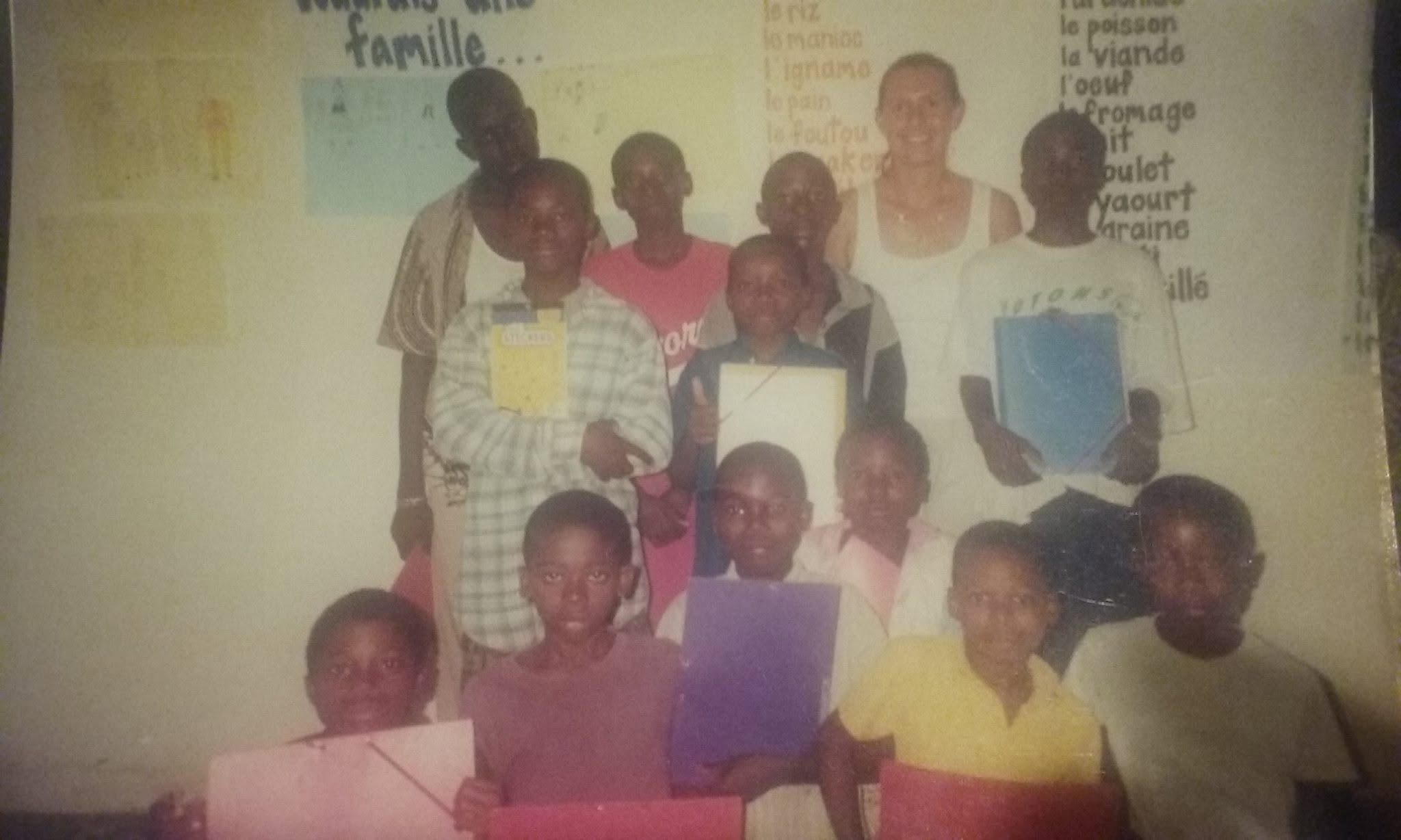
Annaliese hosted a variety of clubs and camps for the students, including a Boys Health
Club.
“I just started to figure it out,” she thought. “I can’t leave now.”
She went to work teaching English as a second language and overseeing several ongoing projects.
“One thing I really wanted to do was not try to replicate services that were already provided by the nurse and midwife,” Limb said. “One, because I was not a clinician and two, our goal is to complement our host country counterparts work.”
The most significant project she worked on were her boys’ and girls’ clubs. She created a curriculum and started by inviting parents and community leaders to learn about the program so they would allow and encourage their girls to attend. Thirty girls came to the first meeting.
She planned to cover a lot in a two-hour meeting, but the girls spent four hours introducing themselves. While teaching in French, older girls needed to translate into Baoulé, and many girls were shy as it was their first time experiencing this type of activity. Instead of rushing, she spent more time connecting with them.
They met every week and girls would wait for an hour on her front porch in anticipation and to walk with her to her room at the clinic. What she thought would be a six-week program lasted for her entire second year of service.
“Trial and error was probably the biggest teacher in all of that,” Limb said, about her time in service.
Observation and actively listening to the girls greatly steered the project forward.
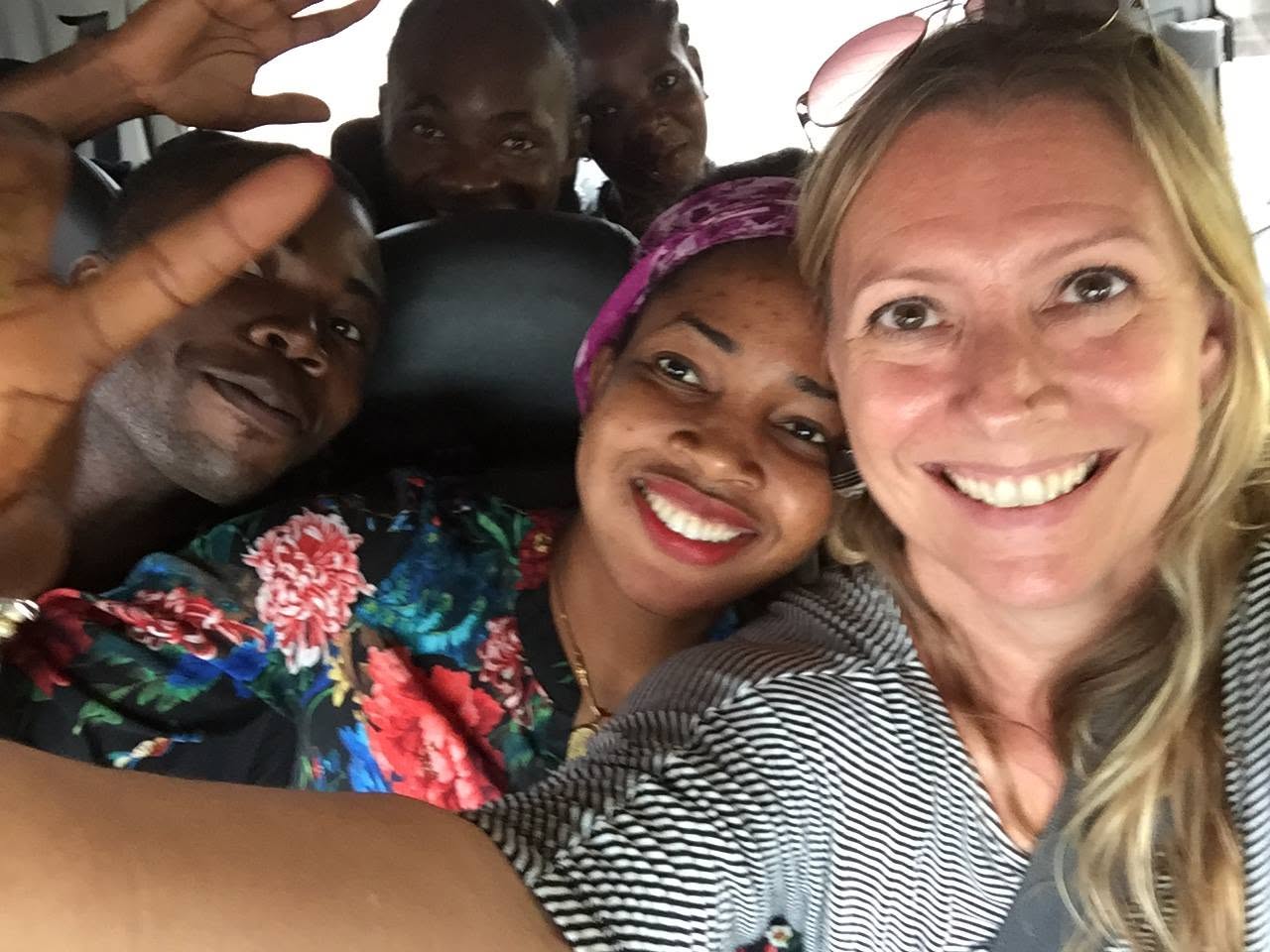
On a return visit to Dieviessou in 2017, Annaliese visits with friends who were previously
in the Girls and Boys Clubs.
At the end of Limb’s project, she held a graduation ceremony for the girls to invite their family. Each one of them stood up confidently, introduced herself, and stated why she was proud of herself and what she wanted to do as an adult.
It warmed Limb’s heart to see the growth they had made through the program in their confidence.
Another large project that Limb assisted in was managing an infrastructure project as the village was renovating two primary schools. She collaborated with the teachers of both schools and experienced some of her toughest moments of service throughout the process.
“Gender roles were quite different and challenging to navigate at times,” Limb reflected.
Being an American woman meant that she could speak more directly than the Ivorian women, but still held less voice than a man. She had to “eat some humble pie,” she said, and learn when she could and couldn’t impact the gender inequity in the community.
In addition to her bigger projects, Limb also created presentations for market days to spread public education on things like malaria prevention or oral rehydration solution.
Throughout her work, Limb was careful to consult the local nurse or midwife to ask about her cultural approach to each topic. She would also consult her best friends, Ouattara and Rosalie.
“[She’s] an incredible woman who had the potential to do or say anything,” Limb said.
Rosalie lived behind Limb and sold attiéké, a dish made from fermented cassava, at the market so she could send her daughters to school. The woman taught herself French, despite never going to school herself, and was a constant confidant for Limb during her service.
“[She’s] one of the wisest women I know,” Limb said.
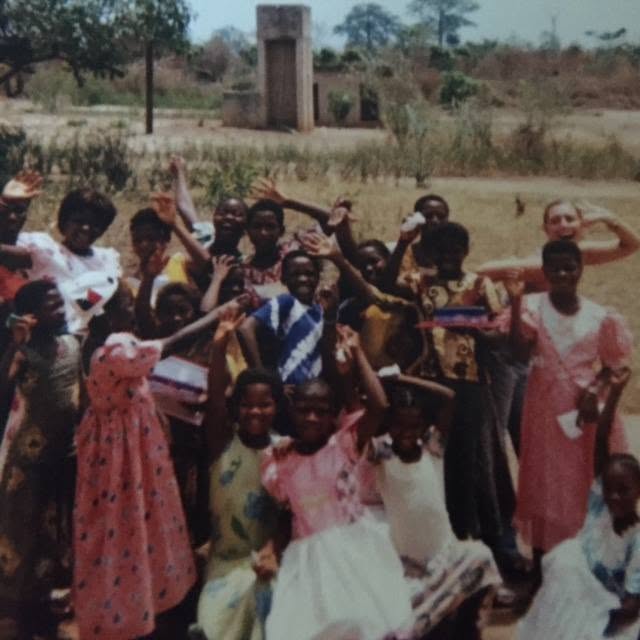
Annaliese hosted a Girls Health Club, which helped her build connections to the community.
Limb made many connections in her host community by respecting the local culture and through her girls’ and boys’ groups. She recalled that each morning she would prop her window open to let the cool air in, and the kids would rush to her porch to greet her and see what she was doing.
“I almost felt like I was putting an ‘Open for Business’ sign up,” Limb said, laughing.
For the first several months they called her ‘bla ufue’ or white lady, but she’ll always remember the first time they endearingly called her ‘tantie’ or aunite. It’s a moment that still brings a smile to her face and tears to her eyes to this day.
“They were so welcoming and so protective,” Limb said. “They were fascinated that I would leave America where I had a car and running water. I answered that question a lot.”
The lack of electricity and infrastructure was what caused Limb to be hesitant all those years ago when she saw the recruiter at the college fair, but she learned that was a change she could adapt to.
“Because I wanted to meet you,” she explained to them. “I wanted to see Côte d’Ivoire and I wanted to learn about you. Because health is important to me. I want to work with your nurse and your midwife, then I want to go back home and tell everyone about Côte d’Ivoire.”
After the civil war in Côte d’Ivoire ended, Limb reconnected with many of her friends from service, including Ouattara and Rosalie, and even the kids from her boys’ and girls’ groups.
She used the non-compete eligibility as a returned volunteer to secure a staff job at the Peace Corps. She started as a recruiter in Dallas, but was eventually able to visit her host community when she became the Associate Director for Public Health Volunteers in Guinea.
Her friend Ouattara prepared the village for her arrival, managing all the cultural and political preparations he helped her navigate 5 years earlier. It was a true homecoming.
Annaliese later became the Director of Programming and Training in Romania and was part of the team that re-opened Peace Corps Sierra Leone and Liberia. Working alongside talented colleagues in all of these countries has steered her professionally and personally.
The program as a whole has greatly impacted her life, even now as she lives in the U.S. again.
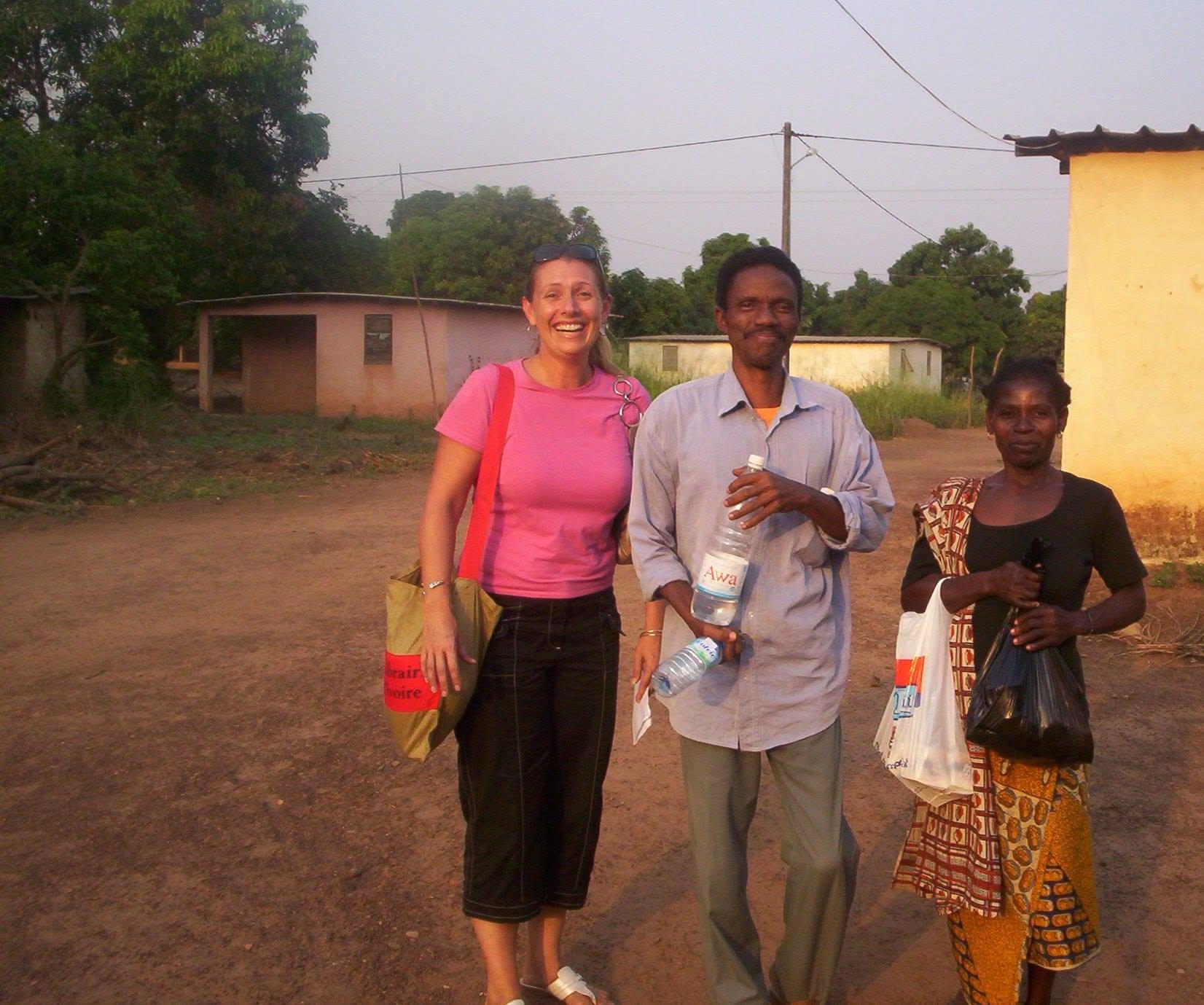
Annaliese visits with Rosalie and Ouattara on a return trip in 2007.
“I think I brought back an even greater appreciation for resilience, an even greater appreciation for sitting around at night with your neighbors and the quiet with no distractions,” Limb said.
She has learned to never complain about not having enough, never waste food, and never get too upset when it rains because she knows that someone’s crops need that water.
“I don’t think I ever reached their level of generosity,” Limb said. “That’s something I’m still striving for.”
She recommends talking to a returned Peace Corps volunteer and asking honest questions. She also believes those considering service should survey their motivations to ensure that the program is the right fit.
“In most cases, I would say absolutely do it,” Limb urged. “It is an incredible experience.”
Interested in learning more about Annaliese's time in Côte d’Ivoire? You can reach out to her here.
Written and Edited by Eliana Fulton, B.A. Journalism Student at UNT
Interviewed by Zach Yeager, Peace Corps Prep Coordinator